| Quick Verdict: Pokémon Pokopia shines as a great new addition to the overall lore of Pokémon, as well as bringing a much-loved genre into the franchise. While it isn’t always perfect, it is a great way to get Animal Crossing, Minecraft, and Pokémon fans something long-term while we wait for the next mainline Pokémon game. |
| Game: | Pokémon Pokopia |
| Developer(s): | Game Freak, Omega Force |
| Publisher: | The Pokémon Company |
| Review Score: | 9 |
| Cozy Score: | 10 |
| Price: | $69.99 |
| Pros: | Tons of content, great story, unique characters feel like a full world, tons of lore and secrets, feels connected to the larger Pokémon story |
| Cons: | Multiplayer feels a bit lacking, precision is often difficult, could use a bit more tutorial for certain early tasks, no fast travel to opposite sides of the same map. |
| Platforms: | Nintendo Switch 2 |
| Genres: | Life-Sim, City-Builder |
Let me start by saying that I’ve been a Pokémon fan since I got the freshly released Pokémon Blue as a gift, back in 1998. While others (including the majority of people I knew) fizzled out over time, I came back to the franchise, time and time again. However, that same Pokémon formula eventually started to feel stale, and after I spent so much of my time in Generation 8 to no end, I opted to skip Pokémon Scarlet and Violet entirely.
I still play and was excited for other Pokémon games since then, such as my daily love for Pokémon TCG Pocket and adamant need to watch any Pokémon Presents. My love for the franchise never ended, but my need for something new was needling at the back of my head for years.
I had quite an extended excursion leaning toward cozy games during the early months of the 2020 pandemic, including pushing around 1000 total hours in Animal Crossing: New Horizons. So, my heart just wasn’t as set on the old daily grind of Pokémon games in my 30s. That’s where this year’s Pokémon Pokopia reignited my love for the franchise.
I originally wanted to write this review early on, get it out to the masses, let it permeate quickly, and then move on. But, as I continued playing Pokémon Pokopia, I let it guide my direction on how I wanted to put my feelings about it on paper. So, now that I’m well over 250 hours into the game (and still going), what do I think?
It’s the end of the world as we know it, and I feel fine.
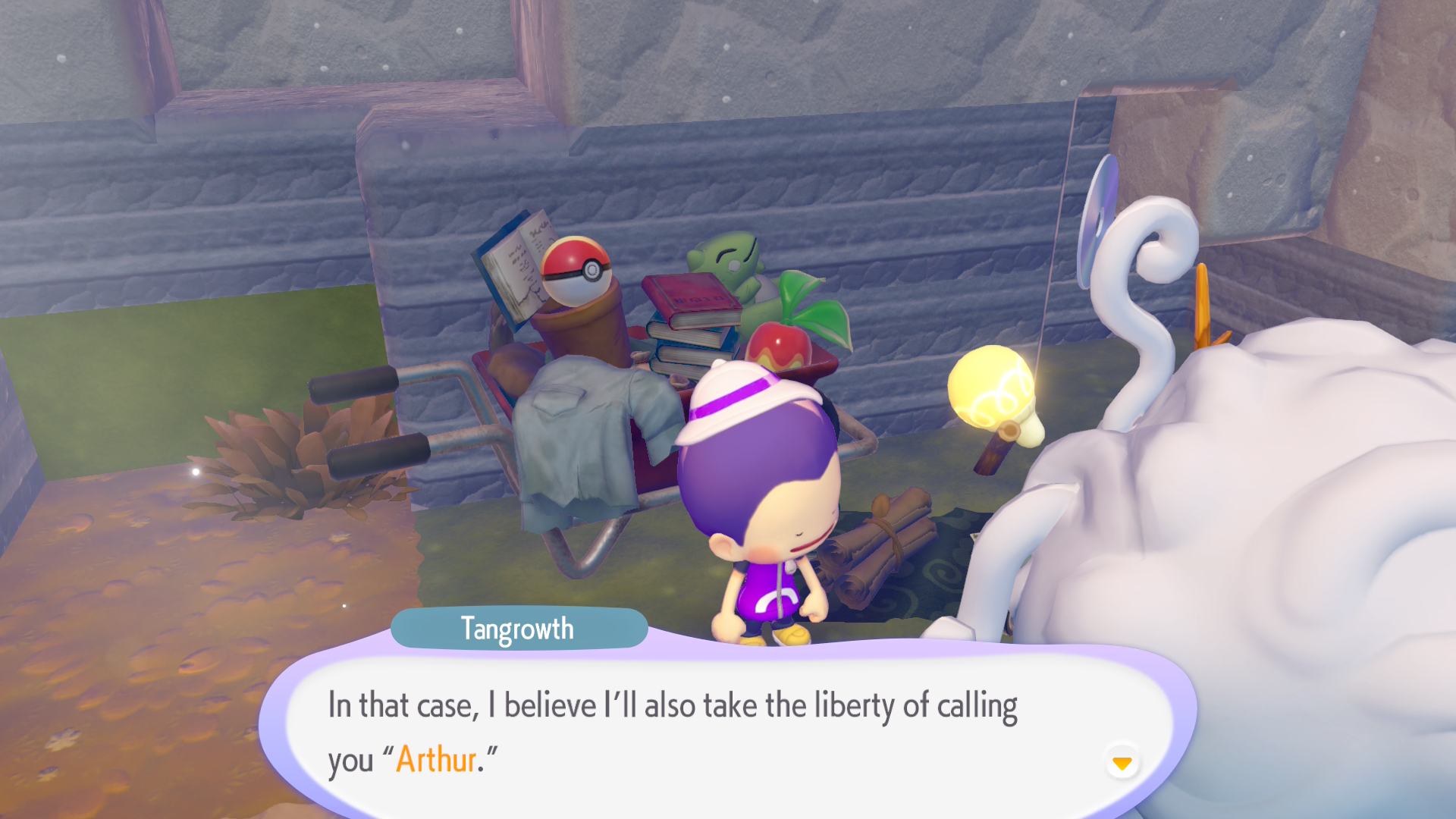
You start Pokémon Pokopia by being introduced to your player character, a Ditto, who has dropped from out of nowhere and decided to change shape to look a tad more “human”. Needless to say, as it’s a Ditto, you’re just “uncanny valley” enough that it feels more “inspired by a human” than anything.
Quickly, you meet Professor Tangrowth, the game’s Pokémon Professor who also happens to be a Tangrowth, who informs you that you’re the first Pokémon or human (or anything else) that he’s seen in a long time. You immediately set out to work by building habitats that specific Pokémon may spawn from, such as Bulbasaur or Squirtle, but only one of each specific species.
If you’re familiar with the Animal Crossing franchise, you’ll likely know that you need tools to rebuild your areas, such as shovels or watering pails. However, in a way only Ditto could learn, you start learning new abilities that can help you as you work through the game, such as Cut or Water Gun. Once you learn a new ability, it remains with you forever as you progress.
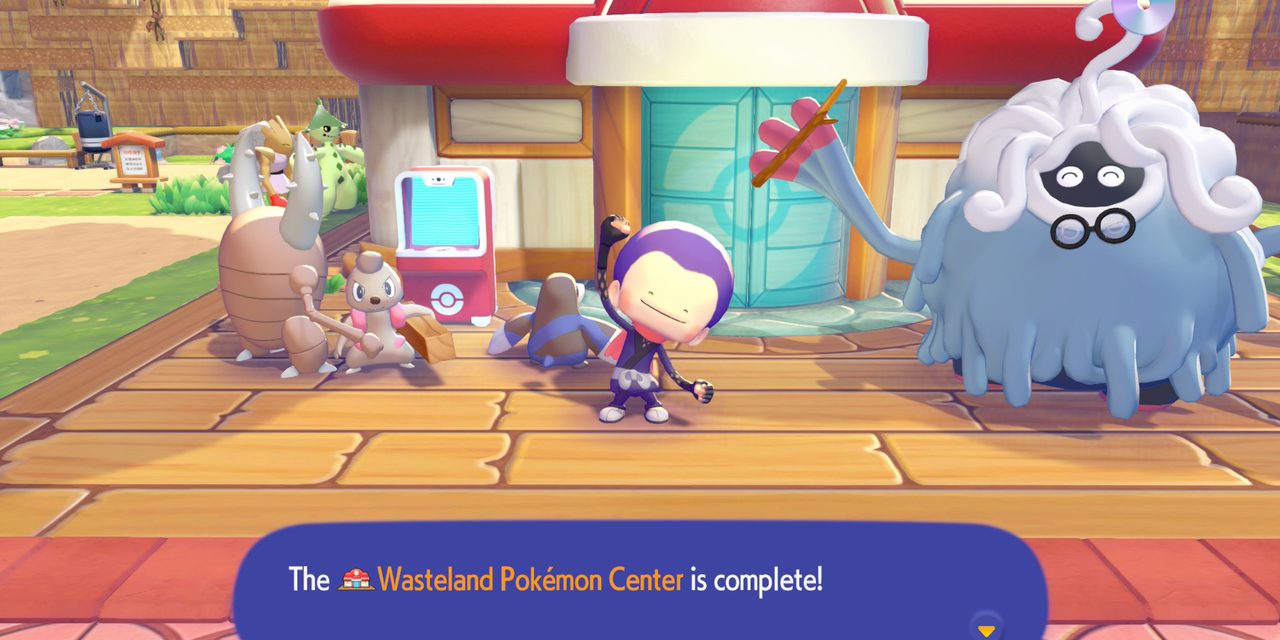
Your first major quest in Pokémon Pokopia is to bring some life back to the starting area, make it more humid in the desolate Withered Wasteland, and rebuild the ruined Pokémon Center. There are a total of four major story-focused areas to explore, rebuild, and revitalize in the main game, with a fifth “post-game” nameable area that you can do whatever you want with. Each main area has a major quest and some smaller tasks to handle as you go along.
Building structures come in multiple flavors. You can create homes that involve loading into a new, small area, a la Animal Crossing, which offer nice area theming for your various needs. You can also build pre-fabricated structures that are more akin to Minecraft, which are made from blocks. Or, you can take it into your own hands and build your own structures, block by block.
As you build, you can also create habitats utilizing items, which are meant to lure out specific Pokémon and serve as their initial homes. There are over 300 Pokémon to find in Pokémon Pokopia, especially when you count event Pokémon or a couple of alternate forms you may come across. And yes, completing the Pokedex has rewards as well.
As the story in Pokémon Pokopia progresses, you learn all about what happened to the humans, why the world seems abandoned, and a lot of heartbreaking notes left around the landscape. You’ll also be helping some mystery character who has been offering off-brand Pokémon Gym Badges for you to do specific tasks. I won’t spoil the story here, but it leads towards the end of the main story through normal progression.
We all live in a Pokémon world (a Pokémon Pokopia world that is)
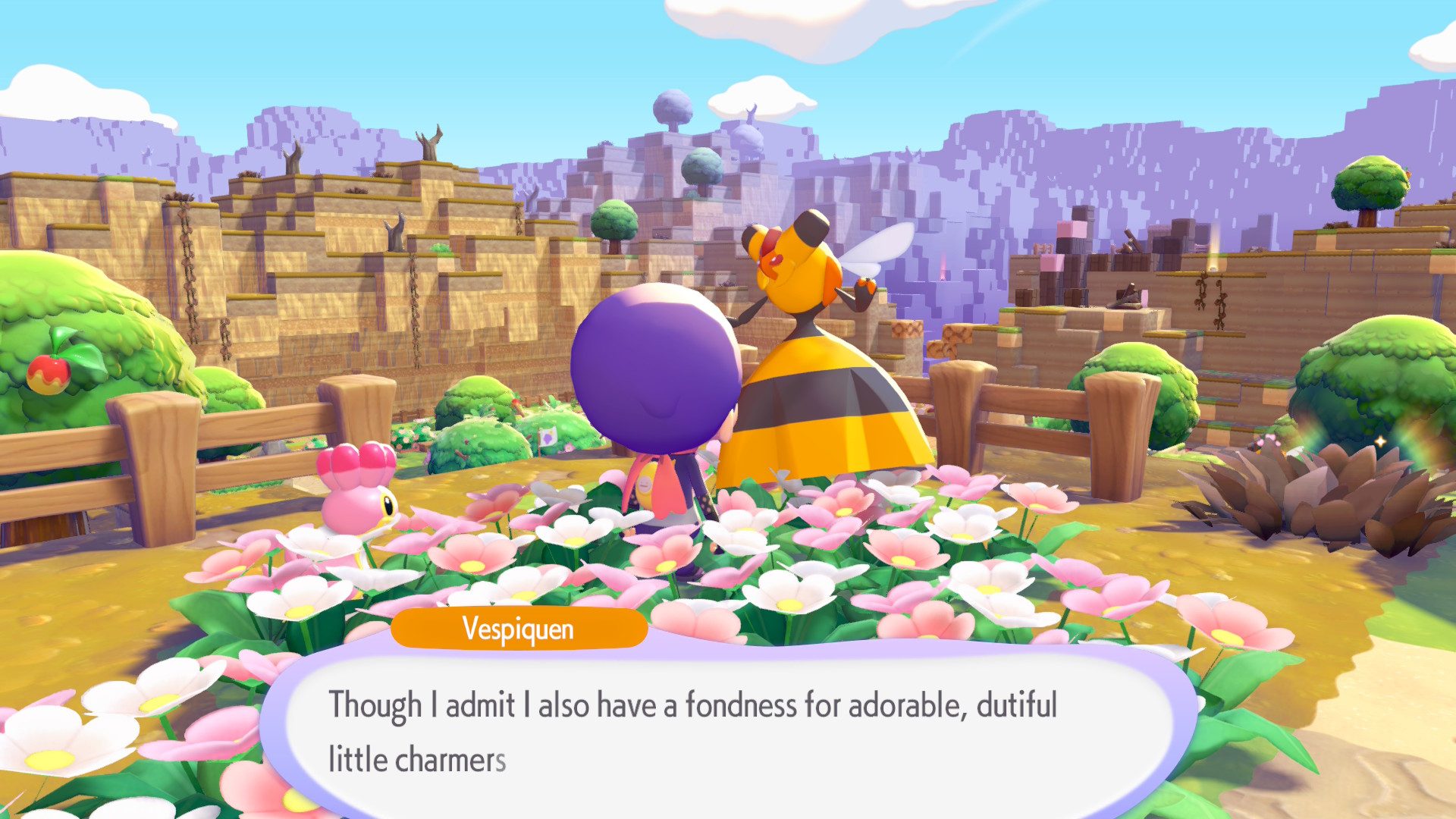
As mentioned earlier, I’ve spent the last 250 or more in-game hours beating the story, completing the Pokedex, making every possible habitat, finding every recipe, and designing some fun architecture. Pokémon Pokopia has been a great journey, but I have a lot of thoughts.
Let me get this out of the way by saying that Pokémon Pokopia is such a good game that I can’t stop playing, having logged in at least once per day since it released in March. Not only do I make a little more progress on whatever project I’ve given myself to do at the time, but there are daily stamps that you earn for logging in that can give you more of the in-game currency at the end of each week. That currency is used to buy things at the Pokémon Center PC, such as exclusive recipes, building kits, items, and more.
Something that I noticed pretty early on is how Pokémon Pokopia gives every single Pokémon you encounter a unique initial personality. While they may fall into some similar lines as each other later on, their introduction puts them as individuals. As someone who came from Animal Crossing: New Horizons and its eight personality types, it was really nice to see how each of the 300 Pokémon felt like they were a different character than the last. For instance, Kyogre (one of several Legendary Pokémon you may encounter) has a southern drawl, different from any other Pokémon.
Early on, Pokémon Pokopia feels relatively hand-holdy as it is, but I do wish there were a little more of an early tutorial for certain things, such as making the area more humid or getting hype to 100% for a party. I understand that they put you in the right direction (and you can figure it out with enough tinkering), but a little more of a nudge could have helped early on.
The open-world structure of Pokémon Pokopia allows for quite a bit of exploration. Once you unlock each area, I recommend building a simple home as quickly as possible (complete with a Ditto flag) and checking out what each area has to offer.
Once you unlock the ability to Fly, you’ll be able to easily check out areas you may have missed later on. However, it’s great to get an early sense of scale and the area you have to work with each time.
While it’s obvious that the areas are based on cities from the Kanto Region of the original first-generation games, I have a strong opinion that it’s more specifically leaning on the Pokémon Leaf Green and Fire Red versions. With the release of both of those games as stand-alone titles on the Nintendo Switch only a week prior to Pokopia’s release, it was a great way to get newcomers to understand the devastation that occurred between then and Pokopia’s timeline. I wrote an entire theory piece after Pokopia’s initial announcement that seems all but directly confirmed, which you can find here.
But, with rumors of eventual Pokopia DLC, that does allow us to know the possibilities of what to expect for future areas. Not only is it possible that we’ll see cities like Celadon City, Cerulean City, or Viridian City/Forest, but it also opens up the possibility of the Sevii Islands and more beyond the Kanto Region.
Alas, Pokémon Pokopia isn’t perfect. The multiplayer capabilities are a bit more convoluted than I wanted them to be. But they still work. The controls can be a bit finicky when you need precision, but you can always use the mouse capabilities if you need a workaround.
For a base game, giving this much content and open-world feels like a blessing. But it can be daunting if you get yourself too far into a map without any guidance or guardrails.
Honestly, though, much like how I skipped a portion of the fourth generation many years ago, I skipped the entirety of Generation 9. The same formula for decades was getting stale to me. This entire change of genre is what I needed to get the adrenaline back and get my brain back into the right mindset for Pokémon Winds and Waves in 2027.
If you need a change of pace from the usual training and grind of Pokémon, I highly recommend Pokémon Pokopia as your next purchase for your Nintendo Switch 2. I’m giving this entire game my stamp of approval as I wait patiently for the next event and the first eventual DLC. I can see this being a mainstay for a long time, if The Pokémon Company plays their (Pokémon) cards right.