

Hello there! Welcome to the world of Pokémon! That is, a world with only Pokémon and no humans. Today, I have an Earth-ending Pokopia theory that may change the way you look at the games as a whole and what the future of Pokémon has to offer.
And let me be the first to say that going into this theory, I had some evidence that I wanted to work with to present. But, the more I researched the lore and studied previous games, there is way more than I originally had thought. So, let’s get into why it’s highly possible that Pokopia takes place in a long-abandoned world.
Let’s begin with an amuse-bouche of Pokémon and animals, to whet your theorycrafting appetite
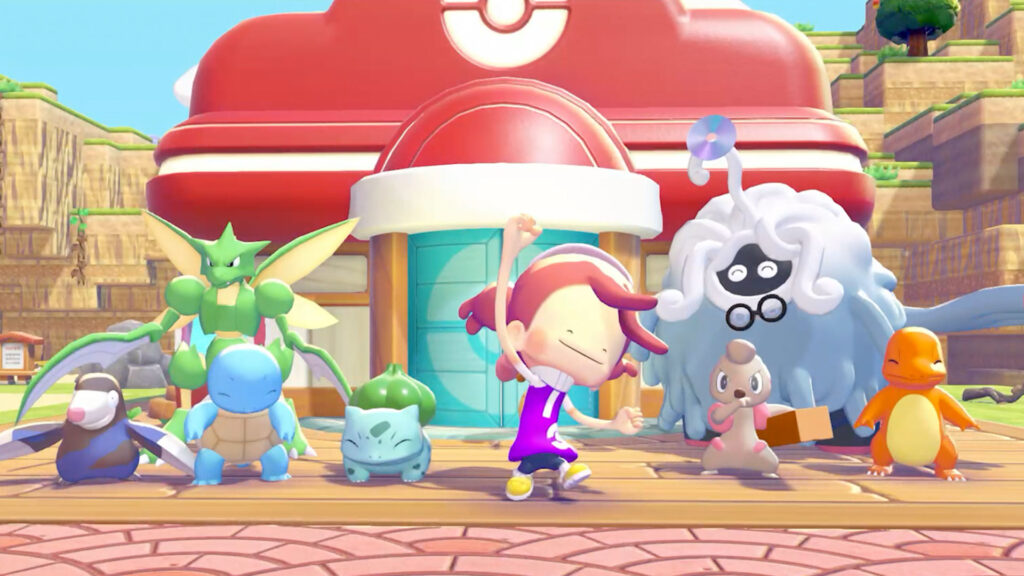
Setting the stage for what the Pokémon world is and how it’s different from our own is pretty easy to explain: Pokémon exist, and there are no real signs of non-Pokémon creatures or fauna in the games.
Early games (especially Pokédex entries) made veiled references to real-world animals, such as Pokémon FireRed’s Raichu being able to cause an “Indian Elephant” to faint. But, aside from the Pokémon categories (such as the entire Pikachu line being “Mouse Pokémon”), real-world animals don’t seem to exist in nature, or at least they no longer do.
Something clearly happened, whatever it may be, to cause animals to Darwin-style evolve (as opposed to the quick evolution we see in the games) into Pokémon and remain that way. Whether it be some apocalyptic event, Infinity Energy, or some other catalyst remains to be seen. If normal dogs existed, people would train them or have them as pets. But, instead, they have Growlithes and Furfrous.
Speaking of apocalyptic or catastrophic events, there is no shortage of those across thousands of years. Just to name a few, the Darkest Day from Pokémon Sword and Shield, AZ’s ultimate weapon from 3,000 years ago (from Pokémon X and Y), the cataclysm of land and sea caused by ancient Primal Kyogre and Primal Groudon (Pokémon Alpha Sapphire and Omega Ruby), or any number of rifts or portals caused by Arceus and Giratina throughout history.
And that’s not even all of them! Ultra Space of Pokémon Ultra Sun and Ultra Moon includes a devastated alternate Pokémon world called Ultra Ruin, which is identical to the mainline games, but entirely ruined and only seemingly inhabited by Guzzlord.
How does this relate to the adorable Animal Crossing-like life sim, Pokopia?
Pokopia isn’t out yet, so a lot of details may be missing. But, the beginning seems to open in a cave where a Ditto breaks out of its Pokéball and explores the surrounding areas.
A classic Kantonian Pokédex is broken on the ground and seems to allude to it belonging to Ditto’s trainer. That’s where our Ditto transforms into a more Ditto-fied, derpy version of the trainer shown on the Dex.
As with most Pokémon games, you meet a Professor early on. This time, though, it’s Professor Tangrowth, who tells you that they have not seen any humans or Pokémon in ages.
Eventually, you start finding hidden Pokémon, but what’s interesting is a ruined Pokémon Center. Pokémon Centers, for the unacquainted, are all-in-one medical centers that treat Pokémon who sustain injuries or have fainted. It’s also a great place to organize your team and prep for your adventure.
While later games merged the Pokémon Centers into the Pokémarts, cafes, and other variants, the original Pokémon Red, Green, Blue, and Yellow games are more specific to their original intent, with Pokémarts being separate buildings altogether.
I’m going to go out on a limb here and say that Pokopia takes place in the classic Kanto region. I say “classic” because there are at least two alternate timelines living side by side: The classic games that came out before Pokémon X and Y, and those that came after.
The design of the ruined Pokémon Center seems to be based on the pre-Mega era of the franchise, as the designs of them were made to be vastly different, aside from the Pokémon Let’s Go Pikachu and Eevee games (which were based in Kanto, albeit in the Mega reality).
The original Kanto Pokédex that is shown in the trailer (and likely the opening of the game) is another key factor here, which was from the original Game Boy games. That book-style Pokedex was only that shape and design in the original games, as it changed for their remakes. The buttons may be slightly different, but they’re definitely meant to be close to the original.
In fact, the music in the Pokopia trailers invokes motifs of those classic games as well. Plus, there is a heavier focus on the “original 151”, but those are just due to The Pokémon Company’s habit of leaning on that generation often for nostalgia.
If Pokopia doesn’t take place in Kanto, then the Pokédex and lost trainer are both likely from Kanto, at the least.
Mise en place: What is Pokémon X and Y’s Infinity Energy, and why does that both matter and not matter in Pokopia?
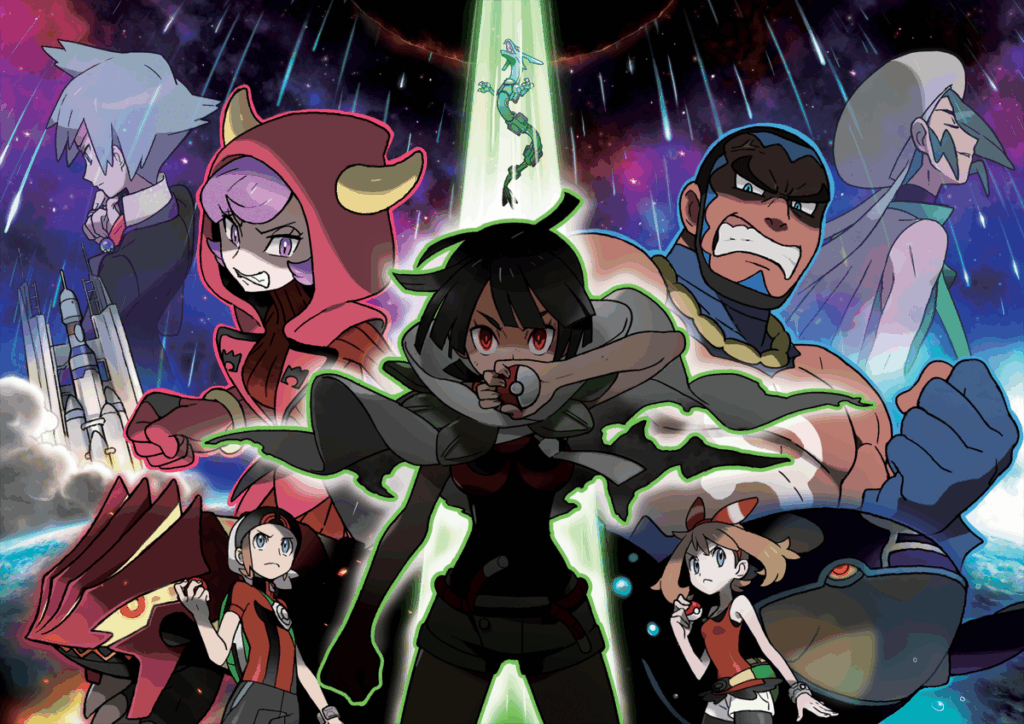
Originally introduced in Pokémon X and Pokémon Y, Infinity Energy is derived from the life force of Pokémon and humans. This led to Mega Evolution, which has been present in many games since, and especially including the most recent game, Pokémon Legends Z-A.
However, a key detail from Pokémon Alpha Sapphire and Omega Ruby’s post-game Delta Episode explained why older games didn’t have Mega Stones or Mega Evolution. During the Delta Episode, there is a meteorite (which turned out to be Deoxys) heading straight into a collision path with the planet.
At the Mossdeep Space Center, you learn that scientists are utilizing Infinity Energy to create a warp hole to send it somewhere far away. The idea was that they might send it to a dimension without Infinity Energy, such as the world (or worlds) related to the classic games.
In the end, Zinnia (who is a major character during the Delta Episode) explains that without Infinity Energy, whatever world they send the meteorite to will likely be devastated due to not having the proper resources to save themselves. In the end, they go with an entirely different (somehow more ridiculous) plan, which involves sending a child into space, riding an ancient dragon, and trying to destroy the meteorite.
During the post-game for Pokémon Ultra Sun and Ultra Moon, it turned out that an alternate timeline version of Giovanni, the former leader of Team Rocket, had won in his world and created Team Rainbow Rocket, even having Mewtwo on his team to prove his domination. From there, he went on a path to find the Team leaders across all of the generations and regions who all won in their respective timelines.
This also includes the pre-redesign versions of Archie and Maxie, the Team leaders of Team Aqua and Team Magma, respectively. It’s really important to note that the redesigns had already happened, and this was a style choice on purpose.
Their goals were to wipe out the entirety of the land or the sea, utilizing Kyogre or Groudon. In their worlds, they did. And neither of those universes would have access to Infinity Energy.
In the end, the idea remains. What if the universe that the classic games existed in came into contact with any number of warp holes, dimensional tears, or Ultra Space and didn’t have the right tools to stop it? What if Pokopia is the end product of a world-shattering event? And what if that isn’t the first time it has happened?
Do Pokémon make up the new civilization and inhabitants in an abandoned world?
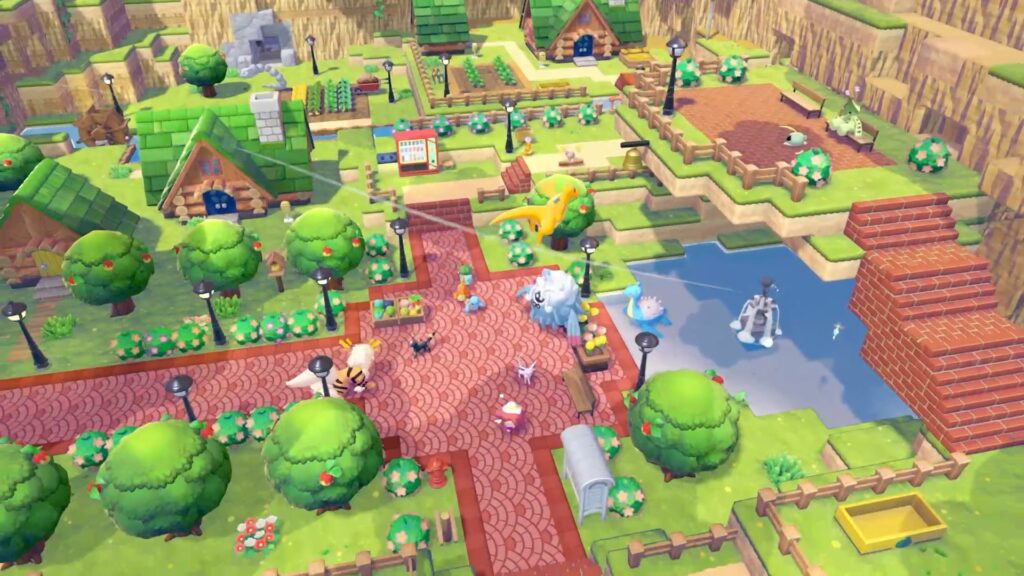
A lot of Nintendo games subtly (or not so subtly) show versions of Earth in a “nature is healing after some event wiped out the humans” kind of affair. Immediately, Kirby and the Forgotten Land comes to mind, which is clearly presented (allegedly) as an abandoned Earth. In addition, the entire Pikmin franchise does exactly the same thing.
So, the theory here posits that the world we’re seeing in Pokopia is likely an alternate Earth, thus making it non-canon to the mainline games. But, it may exist in a world without Megas or Infinity Energy, similar to the original games, which were ravaged by some cataclysmic event at some point in the past.
But, I also want to take it a step further and say that an event like that has already happened in most Pokémon universes that killed off all animals that weren’t actively becoming Pokémon. You can see that whatever has wiped out humanity in Pokopia is also changing some of them to have new variants, such as intelligent Tangrowth (Professor Tangrowth), glowing Pikachus (Peakychu), extra colorful Smeargles (Smearguru), or long-living, moss-covered Snorlax (Mosslax).
Simply put, the pokémon are the new civilization in Pokopia, building from the rubble and remains of humans. The event itself that caused this, while interesting to possibly know, isn’t the important part. This world is now the world of Pokémon, and Pokémon alone.
Just some additional theories and final thoughts on Pokopia
Now, aside from that theory, I wanted to present a couple of other Pokopia mini-theories that are possibly just as likely to be true, which have been swirling around in my brain.
Knowing this is a game that is likely based in Kanto, which is based on the real-world Kanto region of Japan, this abandoned territory could also just as easily be a “Depopulation” situation. Akiya houses are abandoned, vacant homes across rural Japan, which result from the depopulation of rural areas.
Akiya houses generally happen due to aging homes that cost too much to modernize, high taxes, or towns and villages just being abandoned altogether due to depopulation, being too far to be near modern society or resources. In a 2024 report, there are over 9 million Akiya in Japan, including a ton in the Kanto region.
It’s plausible that society is flourishing in cities like Vermillion or Celadon, but whatever rural area Pokopia takes place in could be an old ghost town of sorts. It’s always possible that the Kanto region has plenty of rural areas never traversed in games.
Speaking of abandoned places in Kanto, it’s also possible that Pokopia takes place on the Sevii Islands, just south of mainland Kanto. The Sevii Islands were introduced in the first Kanto remakes, Pokémon FireRed and LeafGreen, giving some additional post-game gameplay to an otherwise straightforward storyline. But, they never really returned after that.
The Sevii Islands consist of nine large islands and several smaller ones surrounding the area. Two of the islands have no settlements but require special event items to access, Navel Rock and Birth Island.
Navel Rock allowed you to get Lugia and Ho-Oh. But, Birth Island is where you can obtain Deoxys, tying us back perfectly to the meteorite that they considered sending through the warp hole to protect the Mega universe.
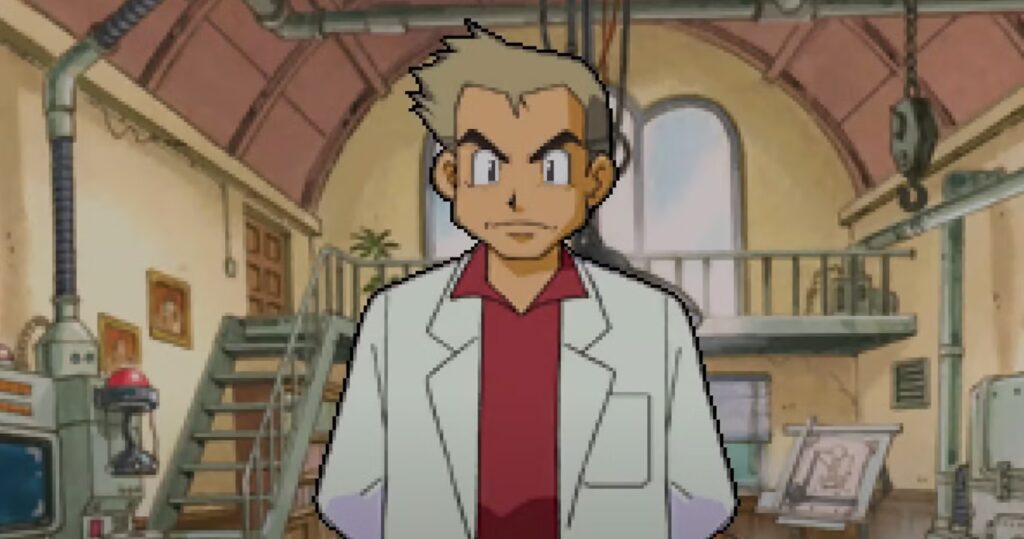
Or, going in a completely different direction, it’s possible that Pokopia takes place on the island that Professor Oak sends Todd Snap to in the original Pokémon Snap, fittingly named Pokémon Island. That not only throws out the apocalyptic theory, but fits pretty well with the environments and abandoned structures found in that game, as well as the heavy ties to the Kanto region.
While we still have so much more to learn about Pokopia, it’s possible that none of these theories are true. But, with no other information aside from the surprise November extended trailer for Pokopia, it’s still too early to tell.
Pokémon Pokopia is coming to the Nintendo Switch 2 on March 5th, 2025.



Trackbacks/Pingbacks